If you have spent any time researching better sleep, you have probably heard the same two suggestions: get a Magicteam white noise machine or point a fan at your bed. Both create a steady background hum that masks the sounds that jolt you awake. Both are affordable. But they work differently, they fail differently, and the right choice depends on what is actually disrupting your sleep.
We tested both setups in a light-sleeper household over several weeks, running the Magicteam sound machine on one side of the bed and a 20-inch box fan on the other. The short answer: if noise masking is your only goal, the white noise machine wins by a clear margin. If you also want moving air in the room on a warm night, the fan earns its spot. Here is the full breakdown.
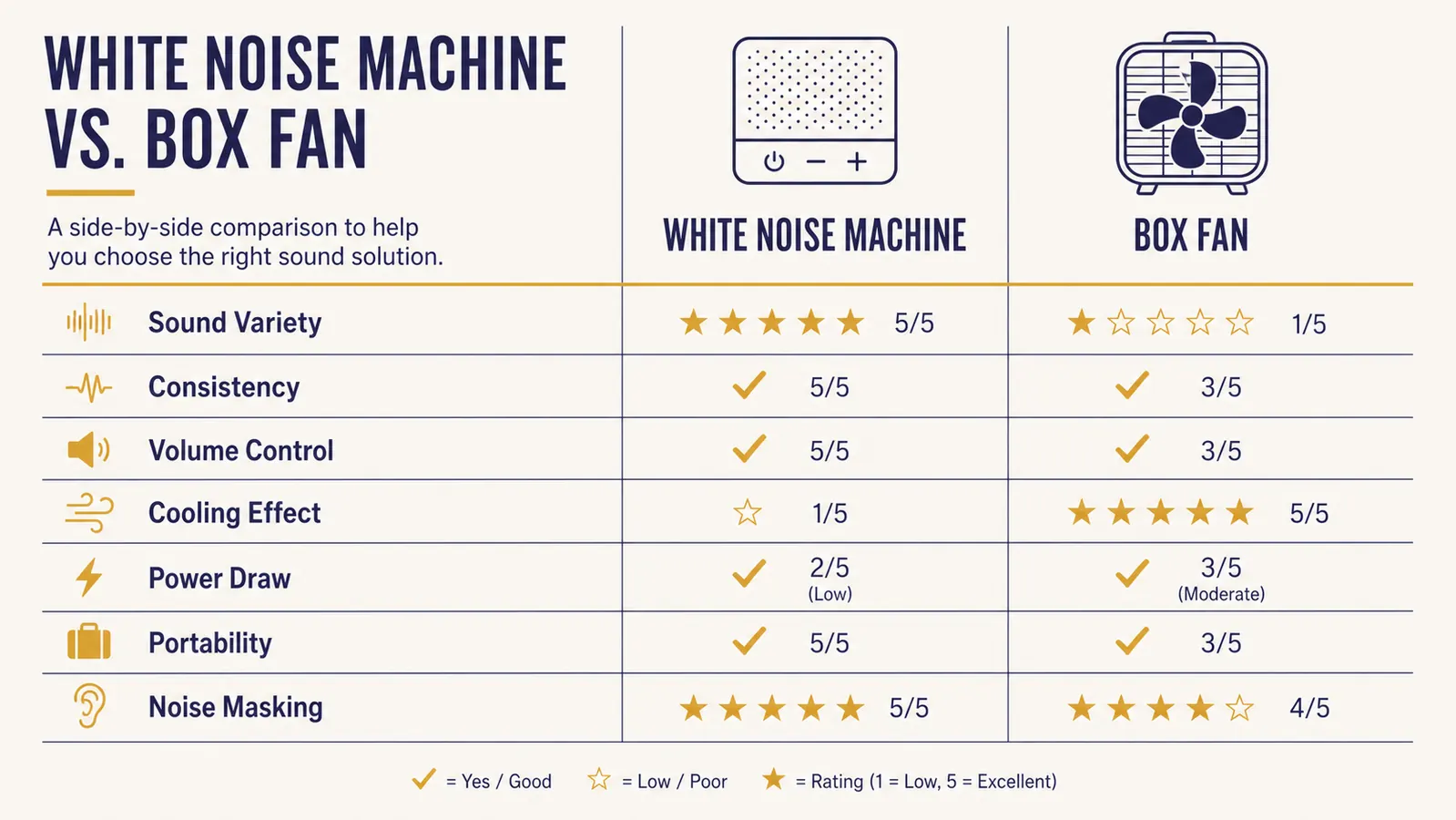
| Magicteam White Noise Machine | Box Fan (for sleep use) | |
|---|---|---|
| Sound variety | 20 non-looping sounds: white, pink, brown noise, rain, ocean, brook, fan sounds, and more | One sound: the motor. Slight variation by speed setting (low/medium/high). |
| Consistency | Electronically steady. Volume and tone do not drift, rattle, or change over time. | Motor noise can vary. Blade wobble or dust buildup creates rattles over months of use. |
| Volume control | Smooth dial with fine gradations. Set it anywhere from barely audible to 85 dB+. | 3-speed switch. Jump between quiet, medium, and loud with no in-between option. |
| Temperature / airflow effect | None. Produces only sound. Room temperature is unaffected. | Meaningful airflow. A 20-inch box fan moves real air and can cool a warm sleeper noticeably. |
| Power draw | Under 5 watts. Runs all night for less than a cent in electricity. | 50 to 200 watts depending on size and speed. Adds up on a monthly power bill. |
| Portability | Fits in a carry-on. At roughly 3 inches tall and under a pound, it travels easily. | Bulky and heavy. Not practical for travel. Belongs in one room and stays there. |
| Noise masking | Designed specifically for this. Layered broadband sound covers a wide frequency range, including voices and traffic. | Decent at low to mid frequencies. Less effective against sharp, sudden noises like a barking dog or door slam. |
| Price (typical) | Mid-range on Amazon. Occasional discounts bring it lower. | Box fans are budget-friendly. Floor fans and tower fans run higher. |
Where the Magicteam White Noise Machine Wins
The biggest advantage the Magicteam machine has over a fan is that it was built for one job: producing consistent, room-filling sound to mask disturbances. The 20 sound options include true white noise, pink noise, brown noise, and a handful of nature sounds, including rain, ocean surf, and a babbling brook. That variety matters more than it sounds. White noise is a flat blend of all frequencies and works well for blocking traffic and neighbor noise. Pink noise has a slightly deeper tone that many people find more pleasant for extended listening. Brown noise is richer still, almost like a waterfall, and some sleepers prefer it over the brighter white-noise tones. A fan gives you none of that flexibility.
Consistency is the second major win. An electronic sound machine produces exactly the same output every single night. There are no moving parts to develop wobbles, no blades to accumulate dust, and no motor bearings to wear out and start humming at a different pitch. Light sleepers who are triggered by irregular sound, not just loud sound, will notice this difference within a week. The Magicteam machine also has a fine-grained volume dial rather than a three-speed switch. In a quiet apartment, the difference between level 7 and level 8 on a continuous dial is meaningful. That precision is not available on a fan.
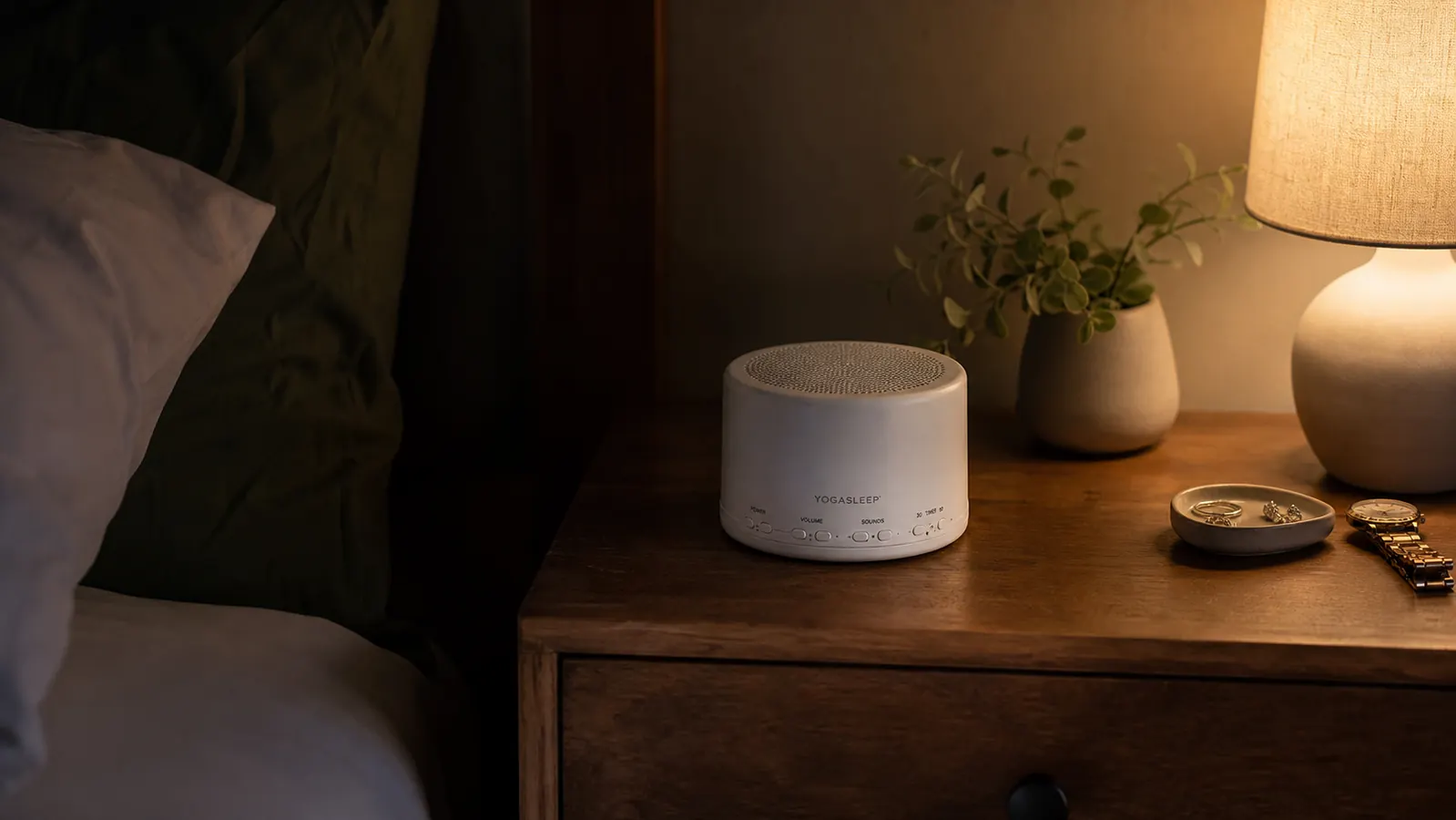
The size and power draw are worth mentioning too. The Magicteam unit draws fewer than five watts and fits on a nightstand without crowding out a lamp, a glass of water, and a phone charger. Its small footprint also makes it practical for travel. If you sleep in hotels, at a partner's place, or stay with family and need your sleep environment to follow you, a machine this size fits in a side pocket of a carry-on bag. A box fan does not.
Where a Fan Wins
A box fan or standing fan has two genuine advantages that a white noise machine cannot match. First, it moves air. On a warm summer night, that airflow is not a minor comfort feature. It is the reason you can fall asleep in a room that is a few degrees warmer than ideal. A white noise machine does nothing for temperature. If you run hot, sleep with a partner who runs hot, or live somewhere warm without central air conditioning, the fan earns its place in the bedroom in a way a sound machine simply cannot compete with.
Second, many people already own a fan. If you have a working box fan in a closet, the cost to test it tonight is zero. That is a real advantage for anyone who is not yet sure whether background noise will improve their sleep. Use what you have first. If you find the fan helps but the single-speed motor noise is limiting, or it develops a rattle, or you want to travel with the solution, that is when upgrading to a dedicated white noise machine makes sense.
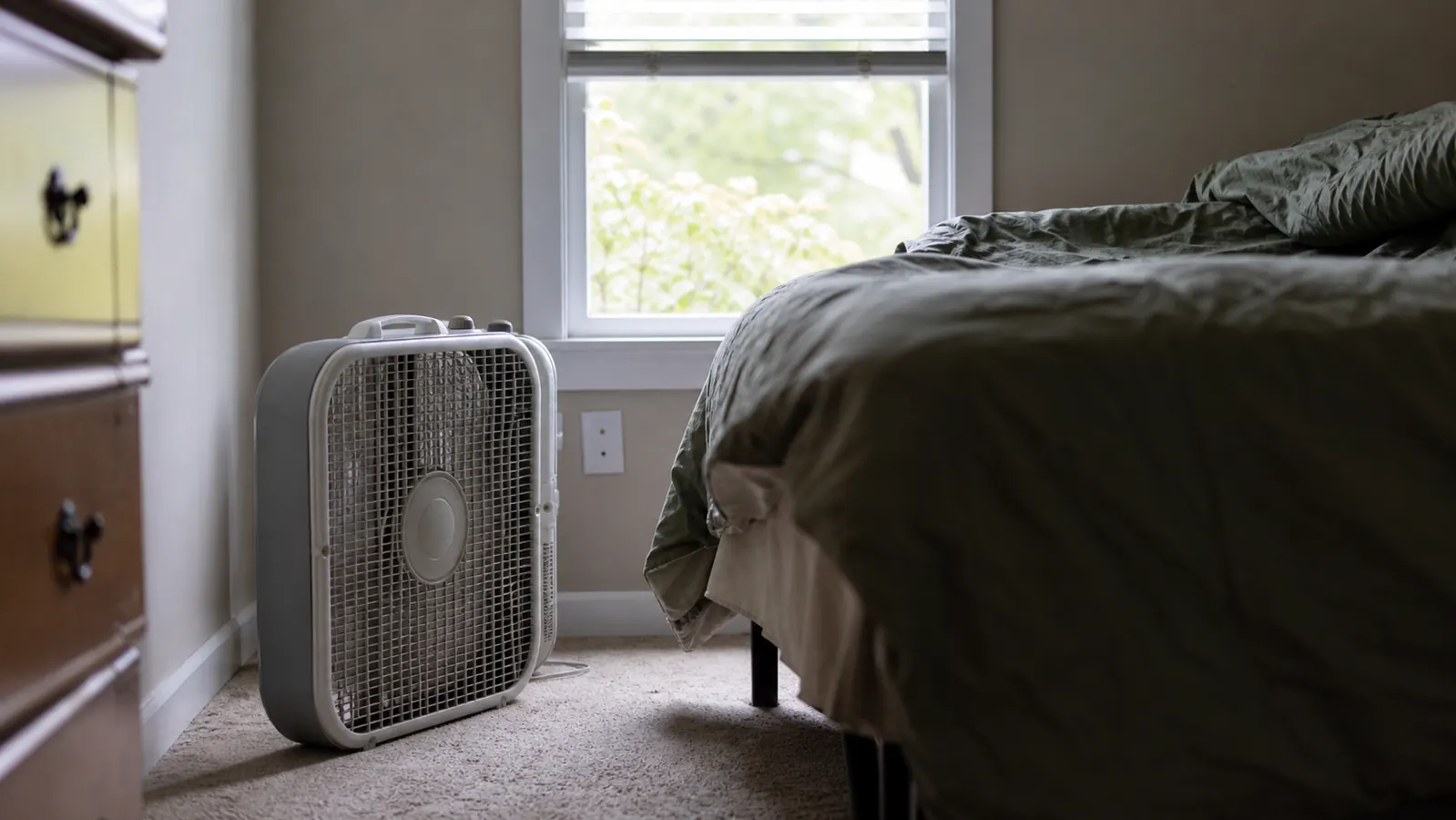
A fan also produces a sound that millions of people already associate with sleep. If you grew up sleeping with a fan in the room, that motor hum is a learned sleep cue. The Magicteam machine actually includes a fan-sound option in its 20 tracks for exactly this reason, which gives you the familiarity of fan noise without the airflow or the power draw. But if you find the real mechanical fan sound more comforting than a recording of it, that preference is valid and worth weighing.
It is also worth noting that fans tend to drift in their noise profile depending on where you aim them. A fan pointed directly at the bed sounds different from the same fan angled toward the ceiling. The pitch and volume shift with direction, which is part of why some people end up adjusting theirs two or three times before settling in. A white noise machine plays the same sound regardless of where you point the speaker hole, which makes it easier to place and forget.
A fan is two things at once: an airflow device and a noise source. That doubles its value on hot nights. But if noise masking alone is the goal, a purpose-built machine does that job more precisely than any fan motor.
If noise is the problem keeping you up, here is the dedicated fix.
The Magicteam white noise machine has 68,000 ratings averaging 4.5 stars. It is budget-friendly, draws under 5 watts all night, and fits anywhere. For light sleepers and anyone dealing with street noise, snoring partners, or apartment walls that carry every sound, it is one of the cheapest reliable upgrades you can make to a sleep setup.
Amazon Check Today's Price on Amazon →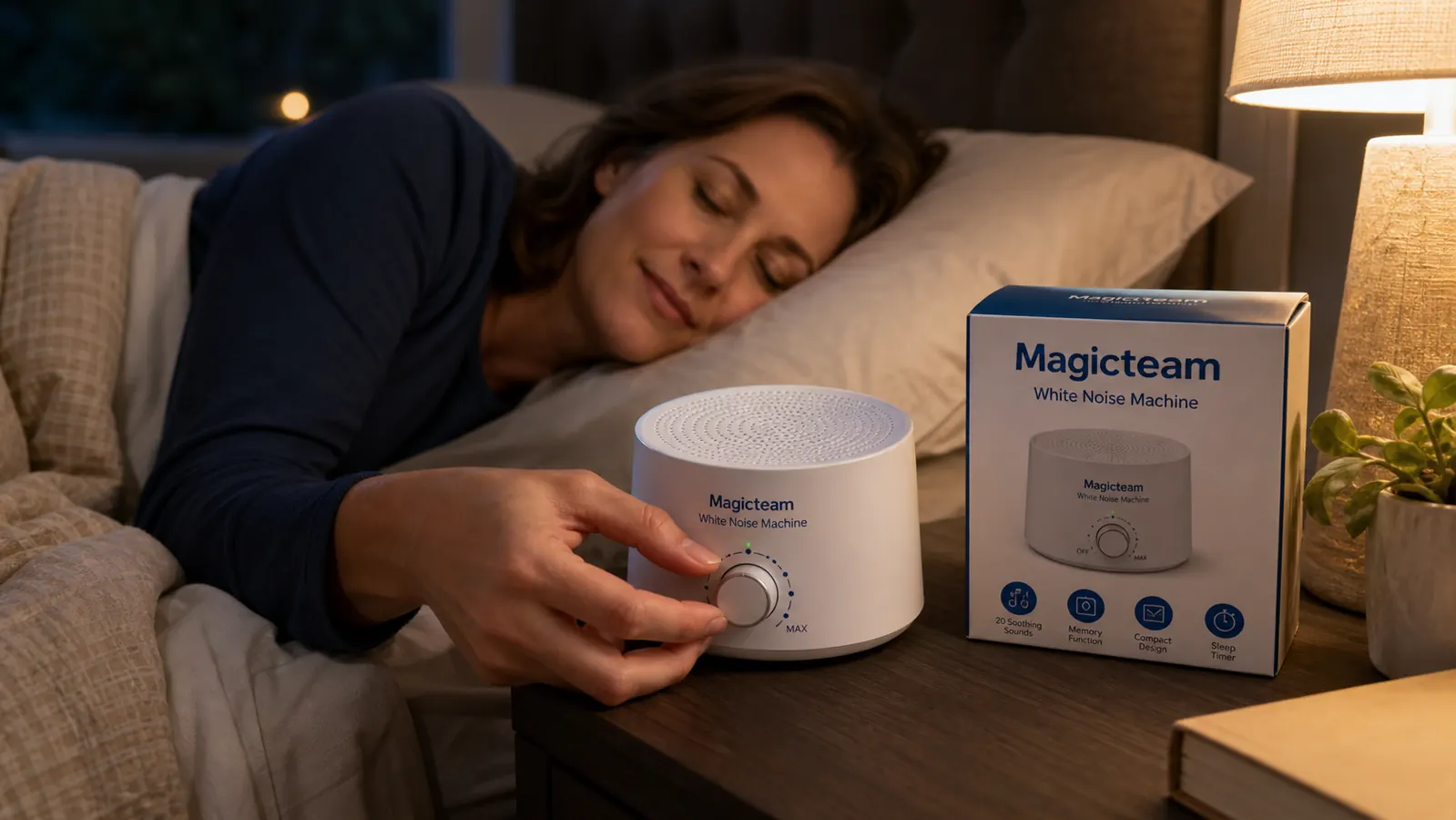
Who Should Buy Which
Buy the Magicteam white noise machine if noise is your main sleep problem. Street traffic, a snoring partner, thin apartment walls, a neighbor who keeps odd hours, a dog that barks at 3 a.m. and wakes you for good. Any of those scenarios are well served by a dedicated machine that produces layered broadband sound at a consistent volume, with fine control over level. Add it to your nightstand, set it to the sound that relaxes you, and leave it there. It also makes sense if you travel frequently and want your sleep environment to travel with you.
Choose a fan if you need both sound and airflow. Hot sleepers, anyone in a warm climate without reliable air conditioning, and people who find mechanical fan noise more natural than any recording are the best fit. A 20-inch box fan on a low setting covers a surprising amount of ambient noise while also moving the air in a small bedroom. If you already own one and it works, keep using it. If you find the noise masking inadequate or inconsistent over time, the Magicteam machine is a low-cost upgrade that solves that specific gap without replacing what the fan does for temperature.
A third option worth naming: run both. A fan for airflow on warm nights, a white noise machine for precise sound masking. The two do not conflict, and the combined cost is still budget-friendly. Light sleepers who deal with both heat and noise often find this the most complete setup.
A Note on Long-Term Reliability
Fans wear out. The motor bearings degrade over years of use, blade balance shifts, and the rattling that develops is exactly the kind of irregular noise that light sleepers find disruptive. If you have ever been jolted awake by a fan that suddenly started making a new sound, you already understand the problem. The Magicteam machine has no moving parts in its sound-generation system. It is electronic, runs cool, and the 68,000 reviewers suggest a long average lifespan without the mechanical failures that sideline fans. If you are comparing long-term value, the white noise machine holds its consistency in a way a motor-driven device simply cannot match.
The fan's vulnerability is also the reason some people cycle through two or three over a decade of use. Each replacement brings a fresh period of quiet, consistent motor sound followed by a gradual drift toward rattles and wobbles. If you recognize that pattern in your own experience, it is worth asking whether you are really attached to the fan or just attached to the background noise it produces. If it is the latter, the Magicteam machine produces that same noise more reliably, at lower wattage, and without any moving parts to wear out.
For a deeper look at how the Magicteam performs across five months of daily use in a noisy apartment, including a note on the timer feature and the one limitation that shows up around month two, our full review covers all of it.
Ready to stop leaving sleep to chance every night?
The Magicteam white noise machine is the consistent, low-maintenance choice for anyone whose sleep is disrupted by noise. Budget-friendly, 20 sound options, and a fine volume dial that lets you dial in exactly what your bedroom needs.
Amazon Check Today's Price on Amazon →