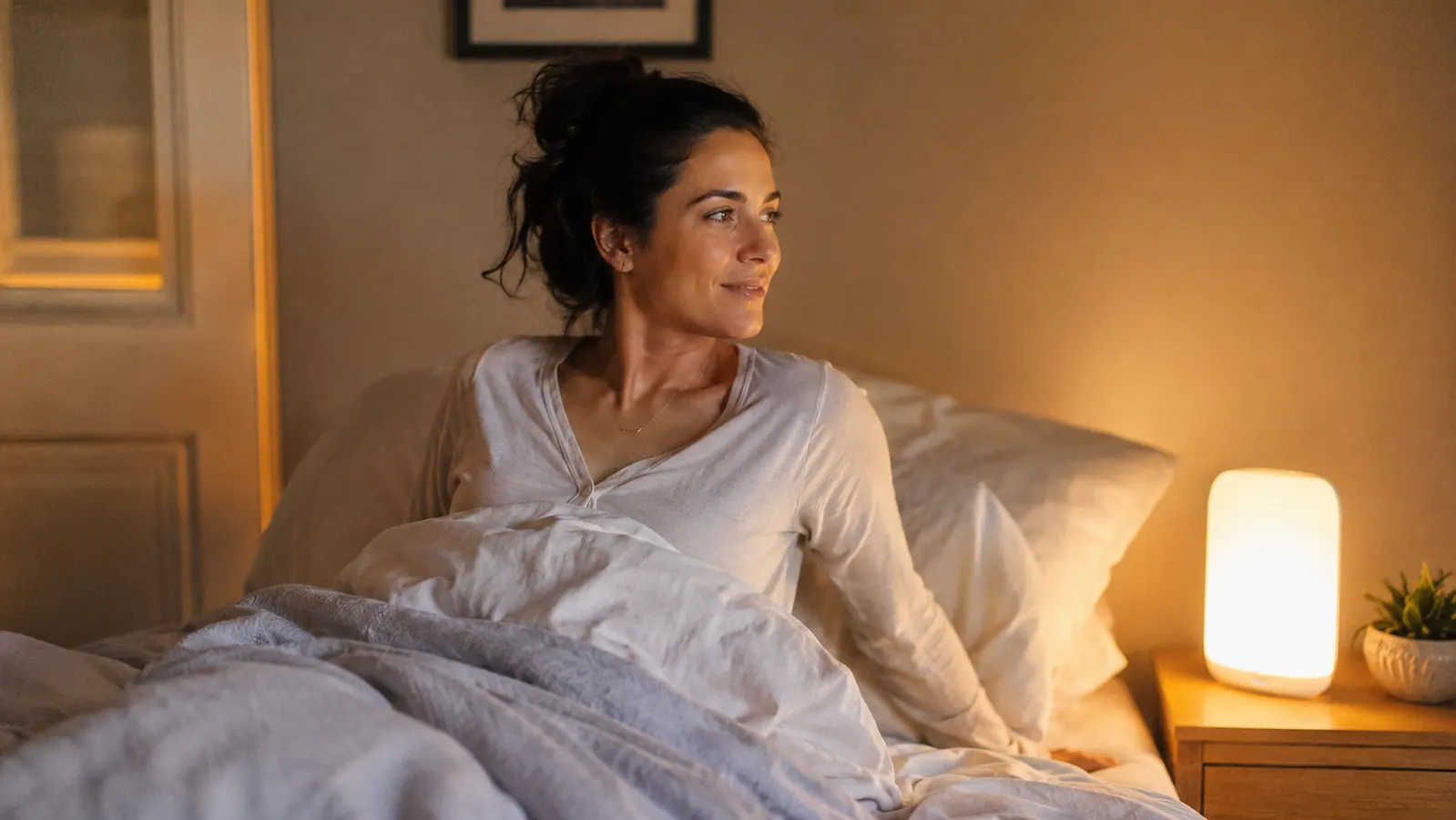
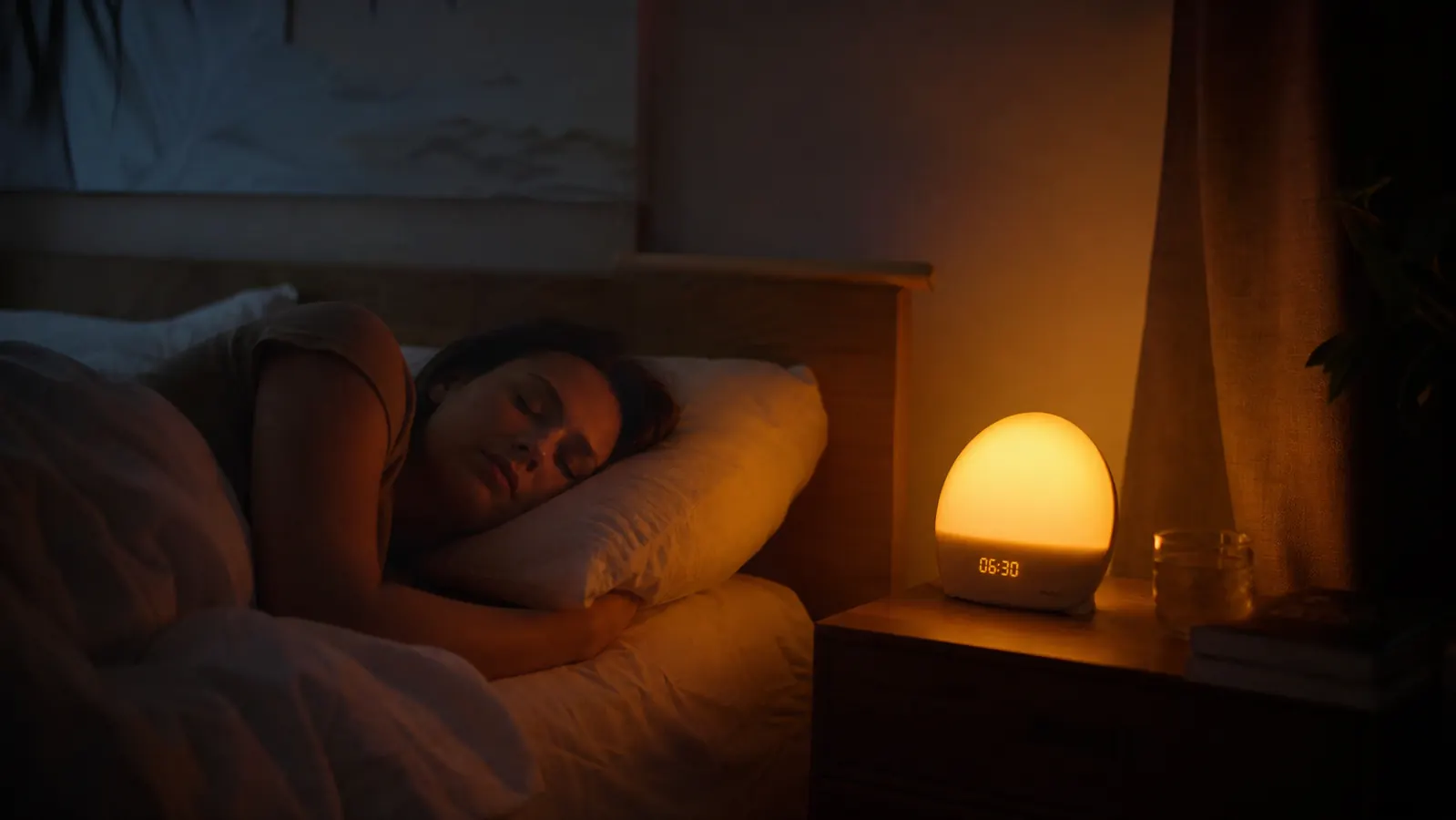
The REACHER sunrise alarm clock and a standard phone alarm are both trying to do the same thing: pull you out of sleep at a set time. How they do it could not be more different, and that difference shapes the first twenty minutes of your entire day.
We tested the REACHER sunrise alarm clock against a standard buzzer clock and a phone alarm for four weeks, tracking how easy it was to get out of bed, how disoriented we felt in the first few minutes, and whether the method changed over time. The short answer: the sunrise clock wins on the quality of the wakeup, but the phone and buzzer win on price and zero bedside footprint. Whether that tradeoff is worth it depends on how your mornings actually feel right now.
| REACHER Sunrise Alarm Clock | Standard Buzzer / Phone Alarm | |
|---|---|---|
| Wake style | Gradual light ramp over 10, 20, or 30 minutes, followed by gentle nature sound | Instant buzzer or notification sound, full volume from the first second |
| Light ramp | Built-in LED that shifts from dim warm amber to bright daylight-style white over your chosen duration | No light feature; room stays dark until you turn on a lamp |
| Sound options | 26 nature-inspired sounds including birds, ocean, rain, and soft chimes | Buzzer clock: 1-3 repetitive beep tones. Phone: any ringtone but still starts at full alert level |
| Snooze | Single tap on top surface; snooze interval is adjustable | Buzzer: fixed 9-minute snooze. Phone: swipe or tap, completely adjustable or dismissible |
| Display dimming | Auto-dims at night so the display does not light up the room while you sleep | Buzzer: bright fixed display, often disruptive. Phone: screen stays dark until an alert fires |
| Bedside footprint | Compact cylinder, roughly the size of a large coffee mug; needs a power outlet | Phone takes zero extra space; a buzzer clock is slightly smaller than the REACHER but no light function |
| Phone-free sleeping | Lets you leave your phone charging across the room, which reduces late-night scrolling | Phone alarm requires the phone to be within arm's reach, keeping it in the sleep environment |
| Night light | Built-in night light with adjustable brightness and warm color temperature | None on a buzzer clock; phone can use the flashlight but it is not designed for bedside use |
| Price | Mid-range; carries a real cost over a free phone app or a cheap buzzer | Phone alarm is free. A basic buzzer clock costs under ten dollars. |
Where the REACHER Sunrise Clock Wins
The core advantage of the REACHER is how the wakeup feels rather than whether it technically works. A phone alarm technically works. So does a smoke detector. The question is whether being jolted awake by a sharp sound the second your alarm fires is actually a good way to start your day, especially if you are someone who wakes up disoriented, groggy, or already stressed before your feet hit the floor.
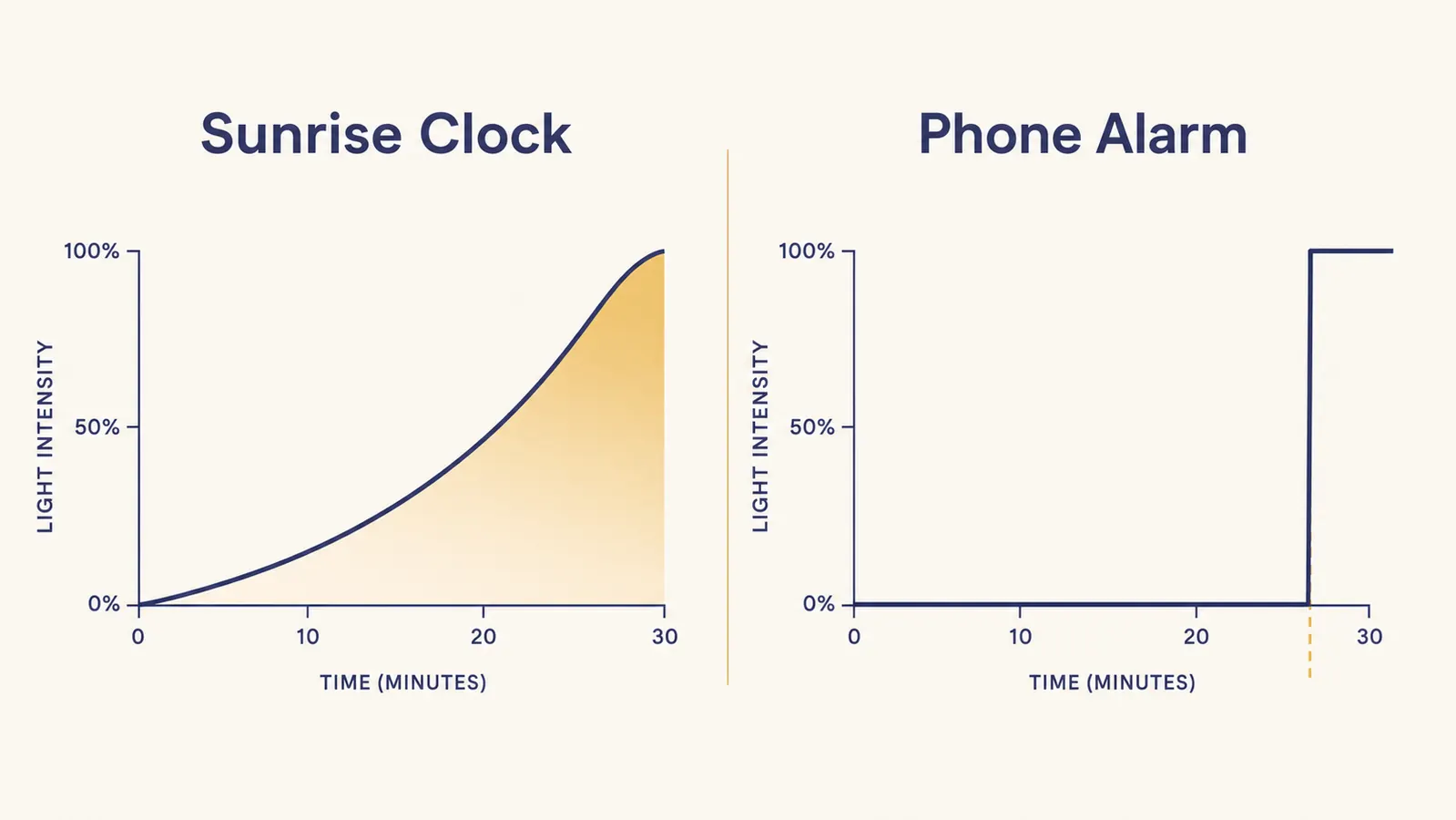
The REACHER starts its light ramp 10, 20, or 30 minutes before your set time. By the time the sound kicks in, the room is already bright enough that your body has been gently signaled to reduce melatonin production. You are closer to the surface of sleep when the sound arrives, so the sound does not need to be jarring to be effective. We found ourselves waking up during the light phase, before the sound even started, on more mornings than we expected. That rarely happened with a phone alarm.
The phone-free angle is also real. Keeping a phone on your nightstand is an invitation to scroll at midnight and again at 6am before you have even sat up. Moving the phone to the dresser across the room, and using the REACHER as your only alarm, creates a small but meaningful boundary between sleep and screens. Several people who make this switch report falling asleep faster simply because the phone is not within reach.
The 26 nature sounds are not just a marketing feature. The distinction that matters is that nature sounds tend to rise and fall in a pattern your brain reads as non-threatening. Birds start quietly and build. Rain has texture but no sharp spikes. Compare that to a buzzer, which starts at a volume designed to override sleep inertia by force. The REACHER's sounds are set at a volume that increases gradually, which means even the audio portion of the wakeup is gentler.
If your mornings feel like a punch in the face, this is the fix.
The REACHER sunrise alarm clock has 4.4 stars across more than 3,400 reviews. It wakes you with gradual light and nature sounds instead of a jarring buzzer, and it lets you leave your phone in another room. Check today's price on Amazon.
Amazon Check Today's Price on Amazon →Where the Regular Alarm Wins
The honest answer is that a phone alarm wins on exactly two things: price and footprint. A phone alarm costs nothing if you already own a smartphone, which most people do. A basic buzzer clock costs very little and fits in a drawer when you travel. The REACHER requires a power outlet, occupies real estate on your nightstand, and carries a real financial cost. If you are in a dorm room, a studio apartment with a single outlet by the bed, or someone who travels constantly and packs light, those are genuine disadvantages.
A phone alarm also offers total flexibility on snooze intervals, alarm tones, multiple alarms for different days, and integration with calendar apps that can automatically set a wake time based on your schedule. The REACHER handles multiple alarms and an adjustable snooze, but the phone's software flexibility is simply deeper. If you sleep in irregular shifts, work rotating schedules, or need six different alarm profiles across the week, a phone handles that more gracefully.
The phone alarm wins on price and flexibility. The sunrise clock wins on how the wakeup actually feels. That gap is larger than it sounds when you multiply it by 365 mornings a year.
The Wakeup Experience, Day by Day
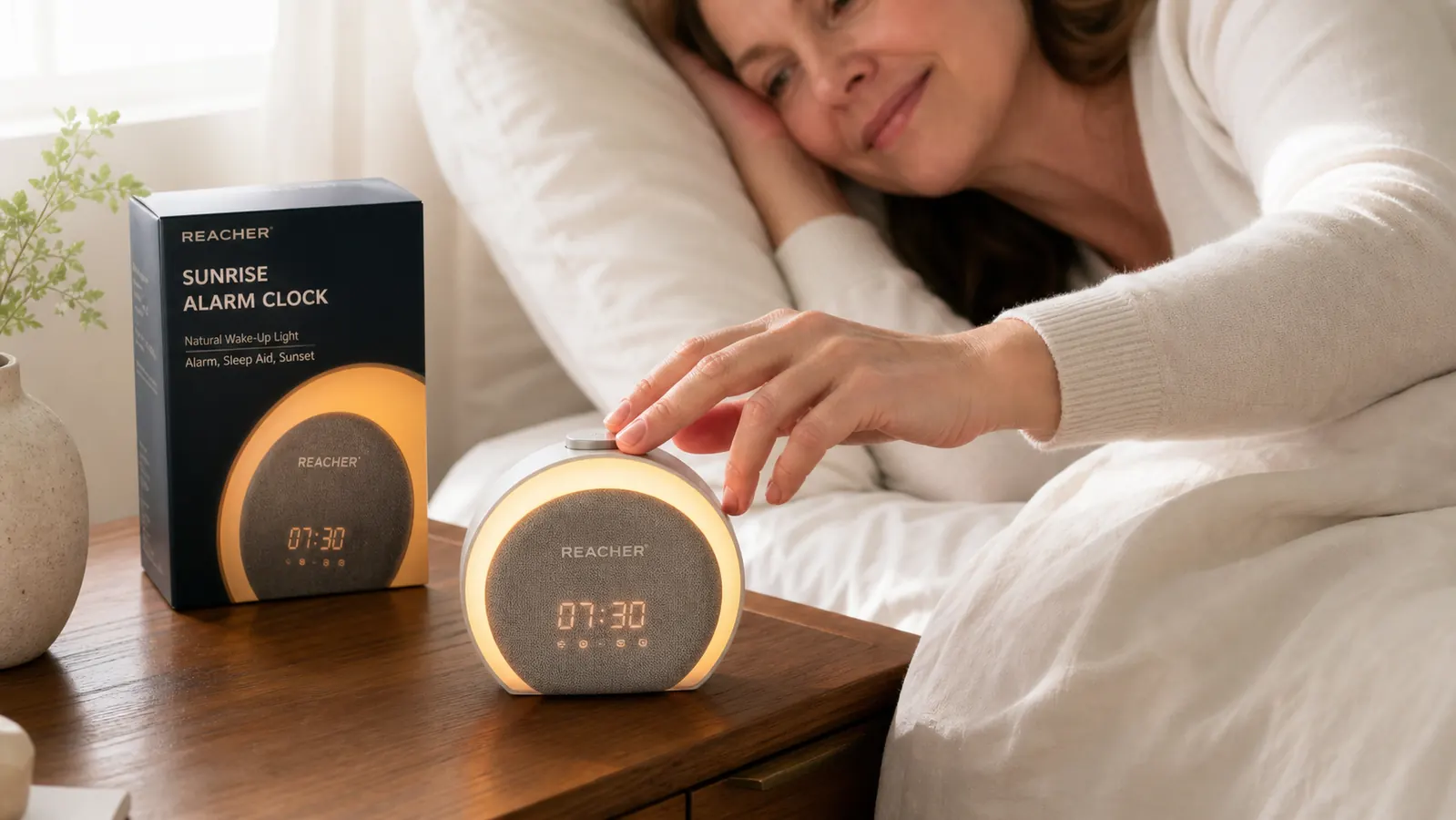
In the first few days of testing, the REACHER felt almost too gentle. We were accustomed to a phone alarm that demanded attention, and the soft amber light and quiet birdsong felt easy to ignore. By day five we had adjusted the light brightness up one level and noticed we were waking up during the light phase rather than lying in the dark waiting to be startled. That shift happened without trying.
With the phone alarm, the pattern was consistent across all four weeks: immediate alertness followed almost immediately by grogginess, a strong pull toward snooze, and a sense of being behind before we had done anything. That feeling is sleep inertia, the disorientation that comes from being pulled sharply out of a deep sleep cycle. The REACHER does not eliminate sleep inertia entirely, but starting the wakeup process 20 or 30 minutes before the final alarm means you are more likely to be in a lighter sleep stage when the sound arrives.
By the end of the four weeks, the REACHER had become the preference for every morning where the full routine was possible. The phone alarm remained useful for travel and for early alarms on irregular days, which is actually how we recommend thinking about both: not as a permanent replacement for the other, but as the right tool for the right context.
Who Should Buy the REACHER Sunrise Clock
The REACHER sunrise alarm clock is the better choice if you regularly wake up feeling groggy or disoriented even after a full night of sleep, if you want to stop keeping your phone on your nightstand, or if you have a partner who benefits from a gradual light signal rather than a shared buzzer. It also works well for anyone whose bedroom stays very dark in the morning due to blackout curtains or a basement room, since there is no natural light to help with the transition out of sleep.
It is a particularly good fit for people who are not heavy sleepers. If you tend to wake up fairly easily but hate the jarring quality of a standard alarm, the REACHER gives you an alarm that works without the shock. If you are a very deep sleeper who genuinely needs a loud noise to get out of bed, the sunrise light alone may not be enough, though you can set the final sound volume higher to compensate.
If you want to read a longer look at two months of daily use before deciding, our REACHER sunrise alarm clock long-term review covers the full picture including how the light intensity holds up over time and whether the nature sounds stay pleasant or become repetitive.
Who Should Stick With a Regular Alarm
A phone alarm or basic buzzer remains the right call if you travel frequently and need something you can pack without thinking, if you already have a well-dialed alarm routine that does not leave you groggy, or if your bedroom gets plenty of natural morning light and the main goal is simply not missing your wake time. A basic buzzer is also the honest choice if the cost of the REACHER is not in the budget right now. Paying for a sunrise clock that creates some stress around the purchase is not a better start to the morning.
If you are not sure the sunrise approach is right for you but are curious, our honest REACHER review goes into detail on what works, what does not, and who the design is actually built for. It addresses the skeptic's perspective directly.
Who Should Buy Which
Buy the REACHER sunrise alarm clock if: you dread your alarm every morning, you want to get your phone off your nightstand, you share a bedroom with someone who wakes up at a different time, or your room is naturally very dark in the morning. The gradual light and sound approach is genuinely different from anything a phone app can replicate, because phones are not designed to light up a room on a schedule.
Stick with your phone or a basic buzzer if: you sleep deeply and need volume to wake up reliably, you need highly flexible multi-alarm scheduling, you travel often and need an alarm that fits in a toiletry bag, or you are happy with how your mornings currently feel and just need a reliable fallback. A phone alarm handled correctly, charged across the room with Do Not Disturb turned on, closes much of the gap. But it does not close all of it, because it cannot fill a dark room with gradual light.
Leave your phone across the room tonight and let the light wake you instead.
The REACHER sunrise alarm clock builds from warm amber to bright daylight over 10 to 30 minutes, plays 26 nature sounds, and auto-dims so the display does not bother you while you sleep. With 4.4 stars and more than 3,400 reviews, it is one of the most tested sunrise clocks at this price point. Check today's price on Amazon.
Amazon Check Today's Price on Amazon →