
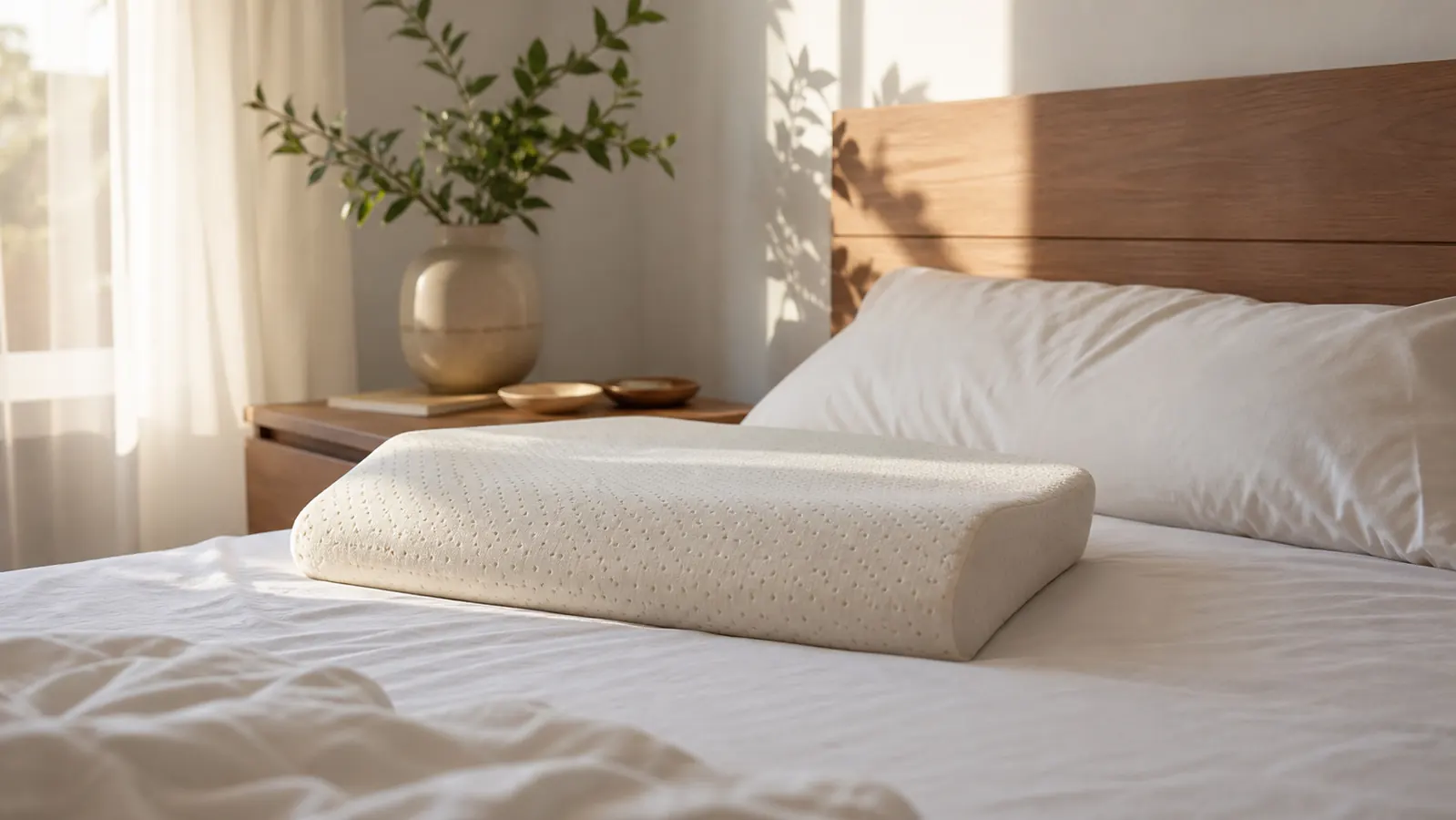
I bought the HOMCA cervical contour pillow on January 9th after three straight mornings of waking up with a stiff neck that took until noon to loosen up. I am a side sleeper, 5'6", 142 pounds, and I had been sleeping on the same cheap polyester-filled pillow for about four years. The HOMCA memory foam cervical pillow is one of the top-selling contour pillows on Amazon with over 11,000 ratings, and the shape, a double-wave foam design with a lower cradle for back sleeping and a taller ridge for side sleeping, looked like it was built for someone in exactly my situation. I ordered the standard size and had it in three days.
What I did not expect was the adjustment period. The first week was genuinely awkward. I am going to be honest about that because most reviews skip past it entirely. But I also did not expect that by week three I would genuinely look forward to laying my head down at night, and that by month three I would donate my old pillow without a second thought and never look back. Here is everything I learned across three months of nightly use.
Quick Verdict
A genuinely well-made cervical pillow that delivers real long-term comfort for side and back sleepers once you get past the first week of adjustment. Not for stomach sleepers. Not for people who run warm at night.
Amazon Check Today's Price →Still waking up with a stiff neck after eight hours in bed? That is a pillow problem, not a sleep problem.
The HOMCA cervical contour pillow is one of the top-rated cervical pillows on Amazon with over 11,000 reviews. Check today's price and see the size and firmness options before you order.
Amazon Check Today's Price on Amazon →How I've Used It: Three Months of Real Notes
I sleep on my right side about 70 percent of the night and roll to my back for the other 30. My old pillow was too thin for side sleeping and too thick for back sleeping, which meant no matter how I positioned it I was always compromising somewhere. I started keeping a simple morning log in January: a one-word description of how my neck felt when I woke up, and whether I had needed to flip the pillow or adjust it in the night. Nothing fancy, just a note in my phone before I got out of bed.
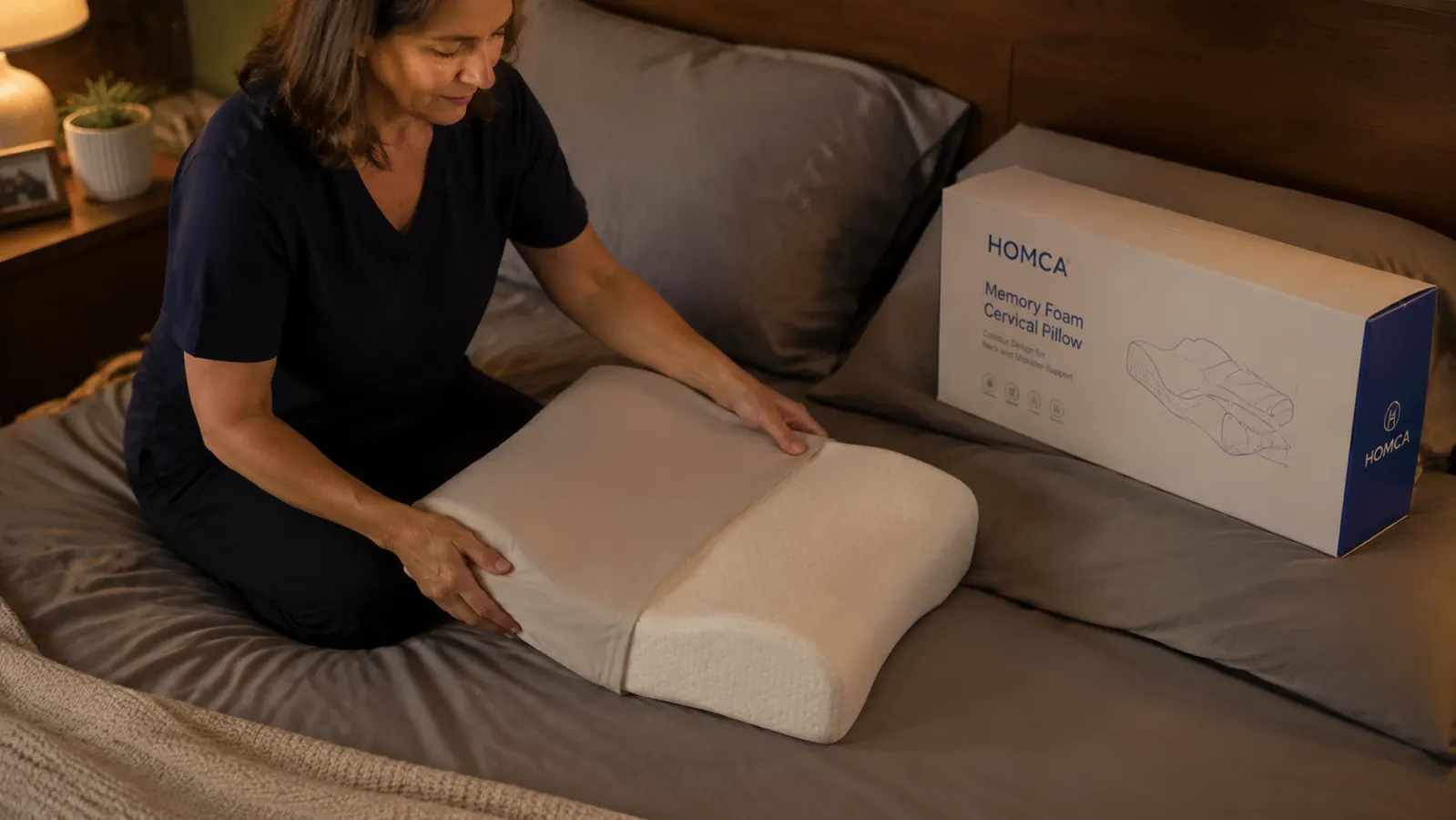
The HOMCA pillow has two distinct contours. The lower wave is shaped for back sleepers and the higher wave is shaped for side sleepers. There is also a curved cutout in the center where your head actually rests, which cradles the skull rather than just stacking foam under it. I used the higher side almost exclusively as a side sleeper. For the first five nights I woke up once or twice repositioning myself because the shape felt unfamiliar under my neck. By night eight I stopped waking up to adjust at all.
By the end of February, six weeks in, my morning log showed "fine" or "good" on 23 out of 28 days. Before the switch I was logging "stiff" or "tight" at least four mornings out of seven. I am not saying the pillow fixed anything medically. What I can say is I woke up feeling less stiff far more consistently, and the improvement held up across the whole three-month window rather than fading after a few weeks.
The Memory Foam and What It Actually Feels Like
The HOMCA pillow uses slow-rebound memory foam. When you first press your hand into it out of the box, it feels firm. Noticeably firmer than a traditional down-alternative pillow. A lot of people get it out of the packaging, press it, and immediately assume it is too hard. I was one of those people. What changes is that body heat and the sustained weight of your head soften it over the first few nights. By week two it had conformed to my typical sleeping position and the firmness felt supportive rather than unyielding.
The cover is a dual-sided pillowcase included with the pillow: one side is a smooth cooling fabric and the other is a warmer brushed-knit weave. I used the cooling side from January through March and genuinely appreciated it. The pillow itself retains some heat. If you sleep warm, that is worth knowing upfront. I had a few nights in a warmer room where I noticed the foam holding heat against my neck in a way that woke me up. Switching to the cooling side helped but did not eliminate the issue entirely in very warm conditions. This is not unique to HOMCA, it is a characteristic of dense memory foam generally, but it is worth being realistic about.
By week three I genuinely looked forward to laying my head down. By week six my morning log showed good or fine 23 out of 28 days. The consistency is what got me.
The Contour Design: What the Shape Actually Does Night to Night
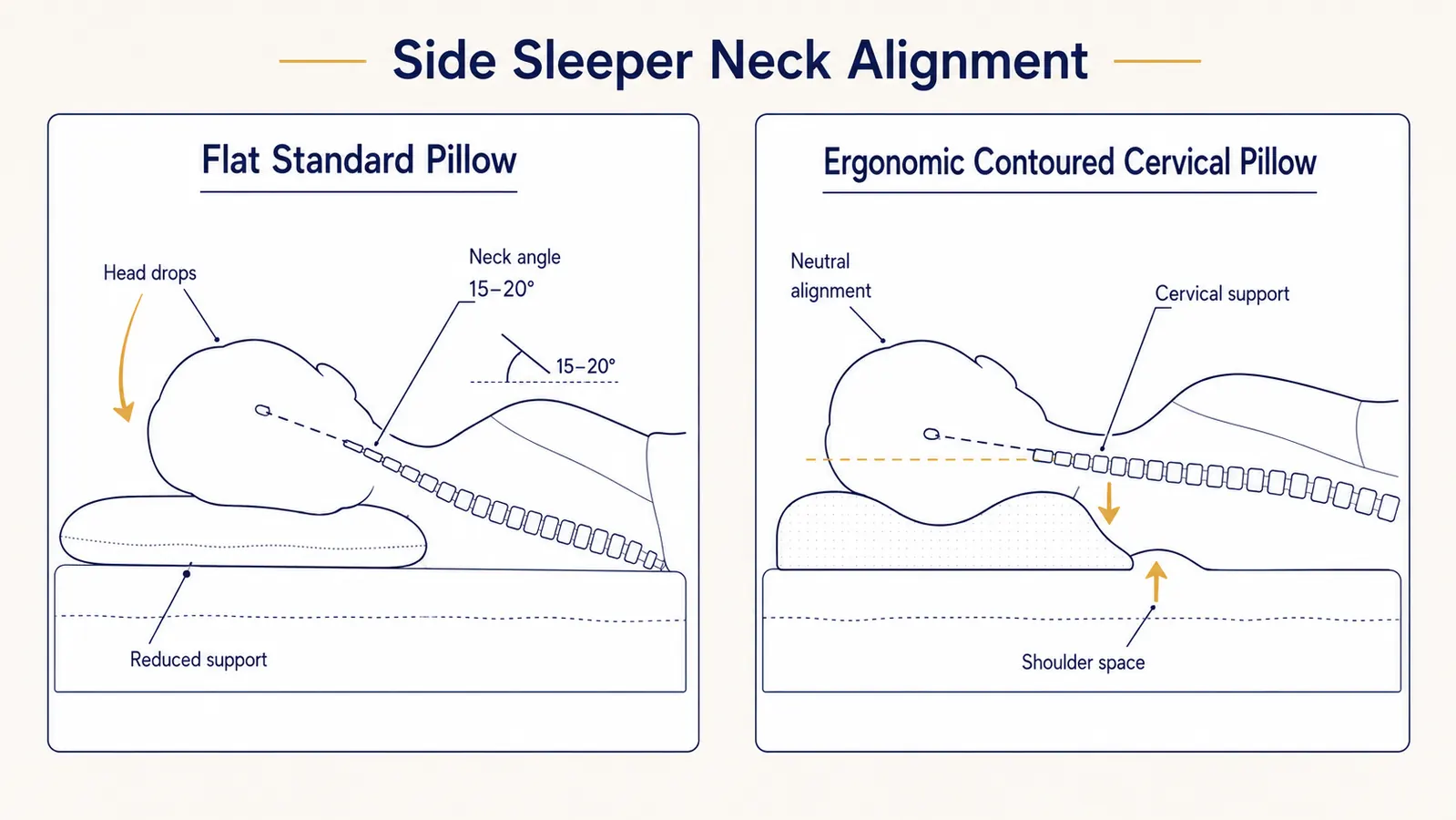
Most standard pillows are a uniform rectangle. You push them into whatever shape you need and they slowly compress back to flat over the course of the night. The HOMCA pillow does not work that way. The contour is engineered into the foam itself and does not change shape regardless of how much pressure is applied. The raised ridge for side sleeping keeps your head at a consistent height above the mattress from the moment you lie down to the moment you wake up, without requiring any repositioning in between.
The curved center cradle takes the pressure off the base of your skull and distributes it across a broader surface area. The first time I woke up in the middle of the night on my back, I noticed that my head had naturally settled into the lower center valley without me consciously moving to it. That transition, from the side-sleeping ridge to the back-sleeping center, happened passively. A flat pillow requires a deliberate active repositioning when you change sleeping positions. The HOMCA shape guides that adjustment while you are asleep.
The pillow dimensions are roughly 23.6 by 13.8 inches with a height on the higher side of approximately 4.7 inches. I have a standard Queen mattress with a medium-firm feel and no topper. The height worked well for my frame. If you have a very thick mattress topper or a very soft mattress that you sink into significantly, the lower ridge might not give you enough clearance for comfortable side sleeping. This is one case where HOMCA's size and firmness variants are genuinely worth comparing before you order, since the wrong height can undercut the whole design.
Performance Over Time: Month One vs Month Three
Month one was the adjustment phase. The foam felt firm, the shape was unfamiliar, and I had a handful of mornings where my neck felt about the same as it did on my old pillow. I almost returned it during week two. I read through a handful of reviews from people who had stuck with it past day ten and noticed a consistent pattern: almost everyone who got past the first week reported a meaningful improvement by weeks three and four. I decided to give it until the end of January.
Month two was where the payoff became real. My mornings felt calmer. The neck stiffness that used to greet me reliably at 7am started appearing maybe twice a week instead of four or five times. I also started sleeping through the night more consistently through February, though I cannot say with certainty whether that was the pillow or the natural ebb in stress I happened to have that month. What I can say is that the correlation was there.
By month three the pillow had settled into a stable, consistent shape. It had not flattened out the way some foam pillows do after a few months of use. The removable cover had been through four wash cycles with no shrinking or pilling. The foam itself retained its structure and the contour still held its original shape when I pressed it. As long-term value in sleep gear goes, the HOMCA held up across three months without any signs of breakdown.
Pros
- Contour shape keeps side sleepers at a consistent head height all night without manual repositioning
- Dual-sided cover offers a cooling surface option for warm nights and a softer textured surface for cooler nights
- Memory foam retains its structure well across three months of nightly use with no visible compression
- Natural passive transition between side and back sleeping positions due to the double-wave contour design
- Well-priced for a memory foam cervical pillow at this quality level compared to premium alternatives
Cons
- Adjustment period of seven to ten days is real, discouraging, and most one-week reviews underplay it
- Retains heat noticeably in warm rooms, even on the cooling-fabric side of the included cover
- Stomach sleepers will find the raised contour creates an uncomfortable neck angle since it is not designed for face-down sleeping
- Out-of-the-box firmness surprises most buyers and can feel uncomfortably hard until body heat breaks it in over the first several nights
- Multiple size and firmness variants in the Amazon listings can be confusing, worth reading the measurements carefully before ordering
Alternatives I Considered Before Buying
Before settling on the HOMCA, I looked seriously at the Coop Home Goods Eden pillow and the Elviros cervical memory foam pillow. The Coop pillow uses adjustable shredded foam fill, which sounds appealing if you want to fine-tune the loft height. The trade-off is that shredded fill can shift and clump over time, and you need to actively redistribute it. The HOMCA's fixed contour removes that variable entirely. I also looked at Tempur-Pedic's neck pillow line, which is genuinely excellent but costs significantly more. For someone who wants to try a cervical contour pillow before committing to that kind of investment, the HOMCA is a reasonable first step.
The Elviros pillow is the closest competitor to the HOMCA in both design and price. The main difference you will see across reviews is that the HOMCA tends to run firmer out of the box and the Elviros lands slightly softer. If you know from past experience that you prefer softer foam, the Elviros is worth a look. If you are coming from a completely flat pillow and want something that holds its shape reliably and breaks in rather than breaks down, the HOMCA's firmness ends up being an asset over time rather than a drawback.
Who This Is For
The HOMCA cervical pillow is a strong fit for side sleepers and back sleepers who have noticed they consistently wake up with a stiff, tight, or uncomfortable neck after what should have been a full night of rest. It is also well suited to people who have tried adjustable-fill pillows and found that the fill migrates or clumps and has to be repositioned regularly. The fixed foam contour removes that problem entirely. If you are a patient buyer who can commit to getting past a week-long adjustment period knowing there is a real payoff waiting on the other side, this pillow tends to reward that patience reliably.
Who Should Skip It
Stomach sleepers should look elsewhere. The raised ridge that works so well for side sleeping creates an awkward neck angle for anyone who sleeps face-down. People who already run warm at night and struggle with overheating may also find the heat retention frustrating regardless of which cover side they use. And if you are the kind of person who gives up on a new product within the first three or four days when it does not immediately feel right, the adjustment period on this pillow is likely to end the experiment before you get to the part where it actually works.
Three months in, my old fluffy pillow is in a donation bag. This one stayed.
If you are a side or back sleeper waking up with a stiff neck most mornings, the HOMCA cervical contour pillow is worth a serious look. Check today's price on Amazon and read through the sizing notes before you order to make sure you get the right height for your mattress.
Amazon Check Today's Price on Amazon →